“Gucci Gang! Gucci Gang! Gucci Gang!” Those are the lyrics to Lil’ Pump’s song called… well… “Gucci Gang”. For many older people, they may believe that this song is garbage because it hold no value to the song and it is just a bunch of noise, but for the younger generations and adolescents of today, they believe that this song is “hip”, “lit”, and “iconic”. This song can be best described as “Trap Music”
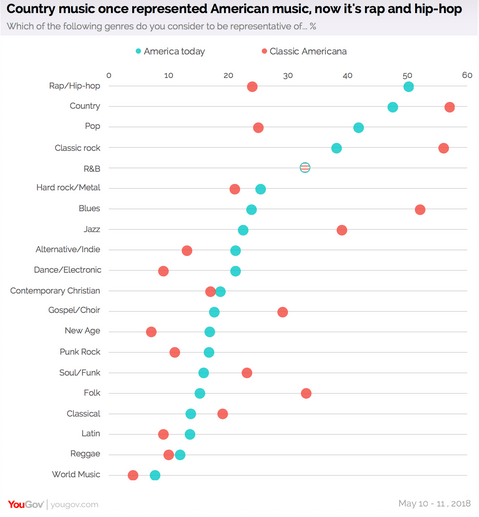
If You take a look at the picture above, you will notice how the music choice in America has shifted from Country music to Hip/Hop and Rap music. One of the most influential genres of music in today’s society is Trap Music.
What is Trap Music? Trap music is a sub-genre of Hip Hop/Rap music that sprouted around the 1990’s but really made a name for itself in the early 2000’s. Trap music is influenced by Hip Hop and EDM or Dubstep, which produces a more aggressive tone of music. Some of the most famous trap music artist include Tip “T.I.” Harris, Young Thug, Future, and NBA YoungBoy. Although trap music is very fun and a great genre of music that brings young people together in an attempt to enjoy life, it also comes with repercussions.
Trap Music has a major impact on the African American community. In my interactive timeline that I have created, I discussed how trap music influences adolescent African Americans in three major ways: Drug Use and Money, Violence, and Sexual Exploitation. Within my presentation, I really analyze how trap music can negatively impact the African American community the most because when the youth consumes content that is of trap music, they often want to imitate what is being portrayed, which falls under those three major categories.
Even though Trap music gave us many iconic dance such as the “Nae Nae” and the one above, it makes me wonder why music has to be so aggressive for artists to be popular and and actually prosper in the music industry. Although trap music has it’s ups and downs when it comes to image, it is a really powerful genre to just vibe to.
Unfortunately, our time has come to an end. This moment is bittersweet for not only me, but all of my other colleagues. Digital Media Literacy has been not only a journey, but a beautiful challenge that I have embarked on and I am glad that I had the opportunity to take this course with Dr. Stacey Patton as my professor. So instead of being melancholy, let’s reflect on my journey throughout this course! Let’s begin!
My Journey
I remember coming back from Winter Break, excited that I made it through my first semester; I was on honor roll and made the Dean’ s List with straight A’s. I was ecstatic to start my second semester. I was hoping it would be a breeze just like the first semester, but boy o’ boy was I in for a rude awakening…
On the very first day of class, I got lost! I could not find Screening Room West to save my life! Once I finally find the room, I enter and automatically feel the vibe. There’s music hip hop music blasting and I am loving it. After a couple of minutes, my professor arrives and we start to meditate. Yes… MEDITATE! Now what professor do you know that starts the class off with some meditation?! I immediately knew that this class was going to be amazing.
Now do not get me wrong, I love a good challenge; I usually get bored if I do not feel like my brain cells are not being worked. But this class was definitely a challenge, more like a slap in the face (but in a good way)! My first assignment… missed. Second assignment… late. Third assignment… challenging. I was not prepared. There were so many weekly written assignments that I was not mentally ready for. I had to make a blog every week on top of implementing a video onto my very own website. Sounds like a lot right?
Amidst having to write a blog every week, I had to record a video to compliment each blog entry. This is where the challenging aspect of this class came in. I had to be consistent. Consistency was very important because not only did I have to make sure that I did not miss any deadlines, I had to have quality work. I had to read passages and excerpts. I have to watch lengthy videos in order to be able to comment on certain topics. It was overwhelming for me; I had to adjust to this workload and fast pace. It was new to me.
After a couple weeks go by, I am starting to get a hang of this! I am taking initiative, looking at emails, asking for help, and communicating with my professor. Life is great (as Future and Drake would say). I receive my progress evaluation for the semester and my results are looking great. This boosts my determination and drive. Overall, I believe that I have really grown throughout the course; from not having any motivation to do my assignments, to being excited to turn upload a new blog post and record videos talking expressing my views and opinions on life.
Key Take Aways
This course has definitely taught me a lot about myself as a person. This class has also given me more skills as a writer and a student.
The main thing that I grasped in this course is the ability to create blogs and vlogs, and turn them into quality content. I have always wanted to create a YouTube, I just never knew where to start. But, as I started to dive into this course, it gave me the confidence to create more videos and explore my creativity.
Another aspect of the class that will stick to me is all of the information that I learned in this course. The content in this course was very interesting and I actually was intrigued. For instance, we watched a episode of the Netflix series Black Mirror called “NoseDive”, which really opened my eyes. It allowed me to realize how much people are entitled to their cellular devices and acceptance from other people. The course also introduced the importance of “Digital Media Literacy”!!!!
Final Thoughts About the Course
Furthermore, I am please with the class. I can not count on hand how many positive things I have to say about this class simply because there is so many. I love the creativity, spontaniety, and overall vibe of this class.
I believe it is safe to say that the most recent generation has to be the “dumbest generation”.
According to Joel Best’s book, The Stupidity Epidemic: Worrying About Students, Schools, and America’s Future, we are living in what has the be the dumbest generation in history. School systems are failing at teaching students adequate knowledge and skills to prepare them for the vigorous workforce and their overall future. While I agree with the fact that schools are a significant source in educating young students, I believe there are more underlying factors that cause my generation to be categorized as the youngest generation.
Growing up as an individual of the “Generation Z”, I believe we are not the smartest group of intellectuals. I remember when I was in grade school, kindergarten to be exact, I learned basic life skills such as how to greet people, say “Please” and “Thank You”, and my ABC’s and 123’s. However, As I am watching younger students transition throughout grade school, I am noticing a shift in the curriculum. Young children are not being taught the same skills as when I was in grade school. I also notice that the drive of not only student, but teachers has drastically decreased. Students do not want to learn and teachers do not want to teach. Surprisingly, teachers will even admit to being there “to pay bills” or “to get a check”. In this case, I believe schools are apart of the blame why we are the dumbest generation.
In Best’s reading, he explains the evolution of American schooling and traces time back to when Sputnik, the first artificial satellite to enter space created by the Soviet Union, was launched. He compares a 1958 photo of a female Russian student who was focused on her education to a few American students that were trying to play music from a jukebox. He explains how this is a prime juxtaposition of the how behind American schooling systems are compared to foreign school systems. He then proceeds to say “No wonder the Russians were ahead in the space race.” indicating that the American lifestyle does not encourage education as much as Russians. Ultimately, I agree with Best, I believe that schools play a big role in providing knowledge for students which is why many Americans may not be deemed as knowledgeable or intelligent, however I would not blame it necessarily on the schools itself but on the people that is in charge of the curriculum.
I also feel that the American curriculum is very compromised. If you think about it, who creates textbooks for students? Mmm… let’s do a google search!
Okay! So, after doing some quite intense research, I have found that the LOCAL GOVERNMENT is in charge of the board of education, which is in charge of the curriculum of schools. What does that mean? That means that people of power are in charge of what is mentally feed to these students. When newer and younger people are elected into the board of education, policies change and become more modern.
In the second chapter of The Stupidity Epidemic: Worrying About Students, Schools, and America’s Future, he states:
“the second criticism—that schools are actually doing worse than in the past—is not necessarily true. Th is is the central concern when people worry about rising stupidity—that education isn’t as good as it used to be, that we are raising the dumbest generation, and that their knowledge deficit will eventually damage our entire society. These propositions may—or may not—be true, but we ought to be able to test them, to search for evidence that can tell us whether there is a Stupidity Epidemic.”
Although I do believe Bests theory of the “failings schools”, I believe the two other significant underlying factors that is causing us to be the dumbest generation is social media and support from households.
Hear me out! If you observe social media, you see so much broken text, misspelled and misused words, and just a bunch of unintelligent phrases. In my opinion, the rise of the internet has played a major role in frying our brain cells. Moreover, artificial intelligence is allowing us to become lazy by relying on “Auto-correct”. To be honest with you, I needed auto-correct while I was creating this post. The more you use technology, the more it ruins your brain activity. In addition to social media, I believe that if students had more of a support system at home, then students would be driven and motivated more in school. Ultimately students lose focus and just are not motivated.
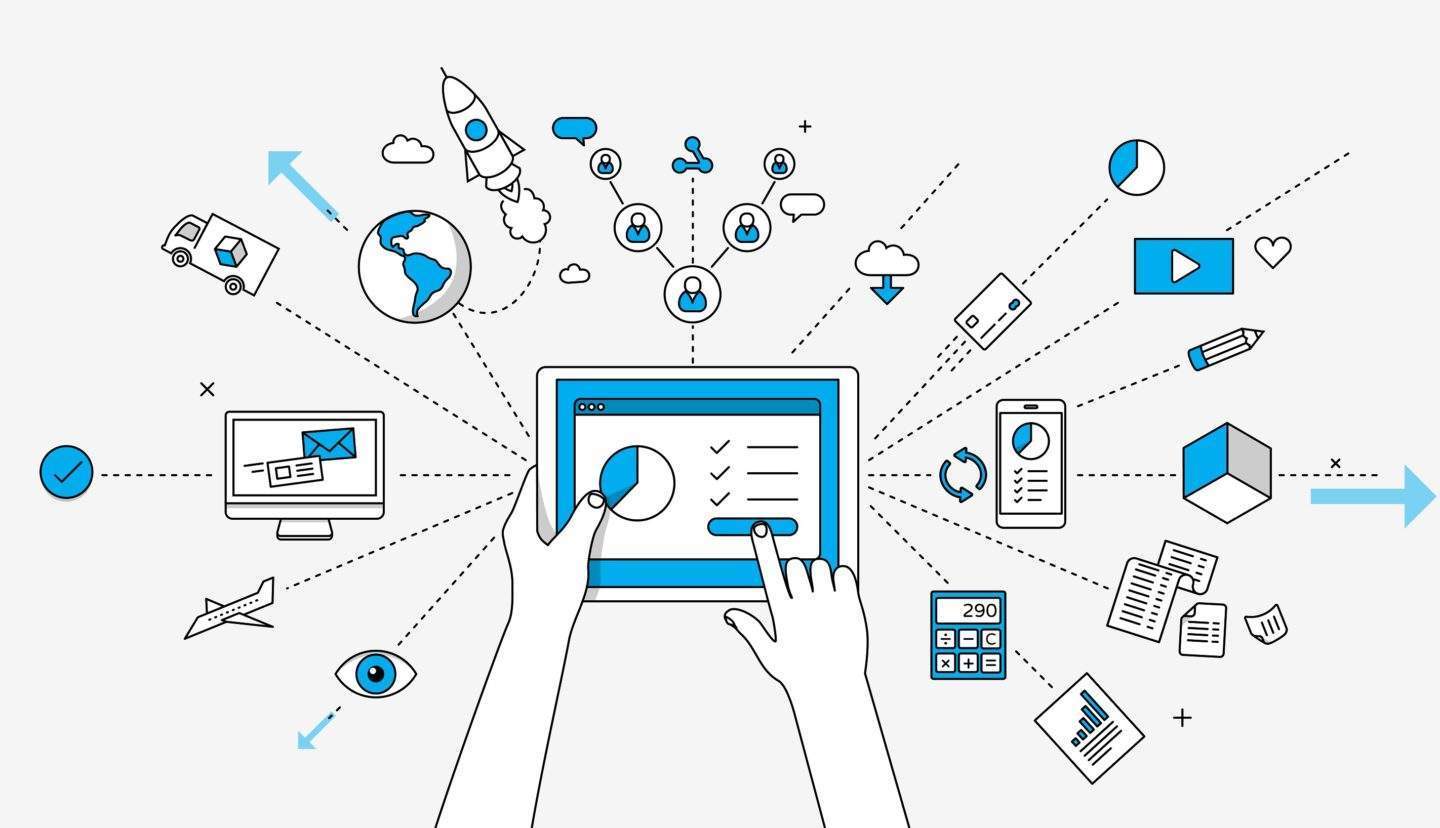
Have you ever wondered where your phone, tablet or computer came from? Have you ever thought of how websites came about and evolved over time? Well, you have found the right place to learn the amazing history of how the information age came to be what it is today!
Way back when (before most of us were born!), the “Internet” was being discovered and invented to be able to share information to one another. The Internet became prevalent during the Second World War, then became advanced during the The Cold war. But, what exactly is the internet?
The History of the Internet
According to a video produced by Khan Academy, the internet is “distribution” of numerous networks. The internet is a wider network that allows individual networks run by organizations, companies, and governments to communicate with one another. The internet can be in the form of cables, computers, routers, data servers, satellites, etc. with the main ability to spread information from one entity to another. However, do not mix the Internet with the World Wide Web.
So the Internet is not the World Wide Web? No! In fact, The World Wide Web (also known as WWW) is a way to view and share information over the internet. While the internet is a network of computer networks linked together, the World Wide Web is just one of the many, if not most popular, ways that information gets passed over the internet. So, just think of the World Wide Web as a “virtual” space of information.
The internet has come a long way since the first encounter with the internet and advanced technology. Below is a timeline of events to show how the Internet and uses had developed over time:
1957
The “Sputnik” was the first satellite created on October 4, 1957, which was launched by the Soviet Union
1958- “Space Race” initiates
After “Sputnik” is launched, NASA and DARPA was created to focus on pace activity and developing top secret defense technology
1969
The first form of internet is introduced to the public; ARPAnet is invented
1972
Email is invented
1982
The term “Internet” surfaces. Giant computers get smaller and are introduced to homes
1989
Microsoft software is created and invented the MacIntosh computer. This invention sprouted hacking which resulted in the military creating a parallel internet.
Tim Berners-Lee creates the “World Wide Web” and introduces hyperlinks to the computer which also introduces the computer mouse.
2000-Present Day
Media and the Internet expands creating more social sites and additional ways to share information
Many web browsers like Mosaic, the first web browser, was created but was not very effective and very slow.
As you can see, the internet has come a long way. The internet has went from Morse Code to reading entertaining blog entries on the World Wide Web such as mine ;p. The information Age is a miraculous, yet mysterious creation, and continues to grow every day.
Browser Wars!?
Amidst of the fast evolving world of the Internet and the World Wide Web, the “Browser War” was another aspect of the invention of the internet that is very important to its history.
In an YouTube video called “The True Story of the Internet: Browser Wars”, the story of how the Browser War started is explained. The video discusses the history of the web browsers “Netscape” and “Microsoft”. IN the video below, I discuss my thoughts and ideas and opinions about the information presented within the video.
Streaming services have transformed the way we look at television and entertain ourselves. People are able to stream their favorite television series and movies on popular streaming services such as Netflix, Hulu, and Disney+. Netflix, an American media-services provider and production and production company founded in 1997, is one of the many streaming services that offers viewers movies and well-known tv series while also creating and producing their own original content that is available on their server.
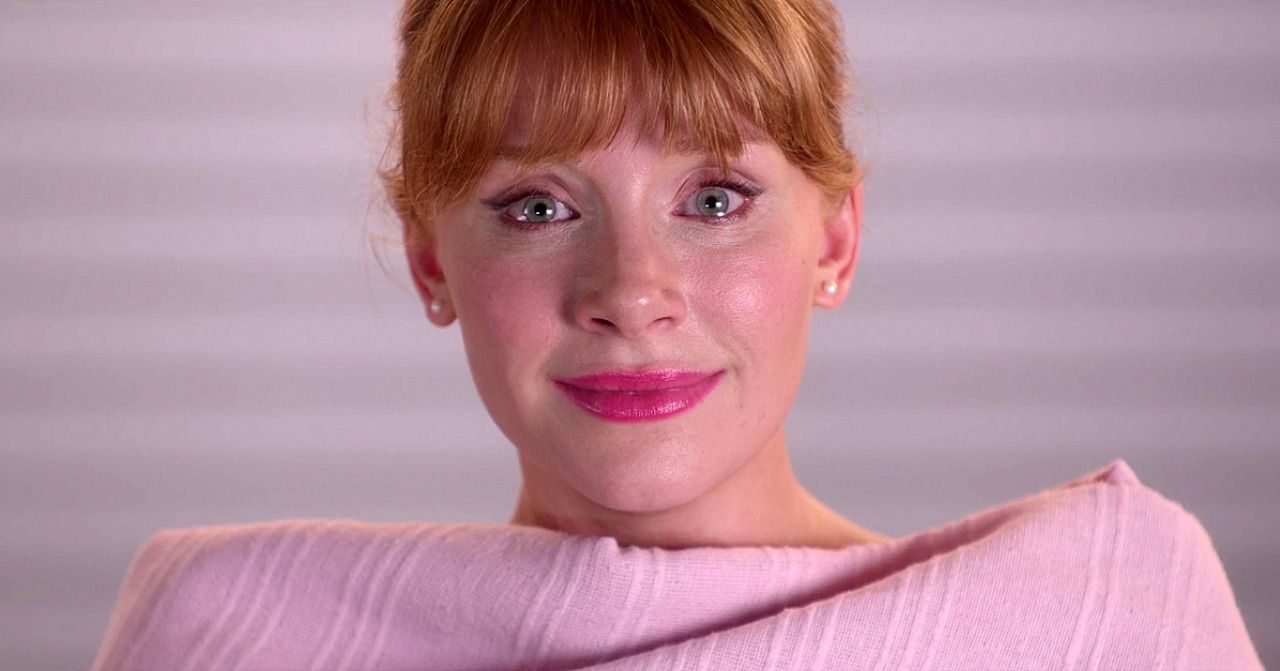
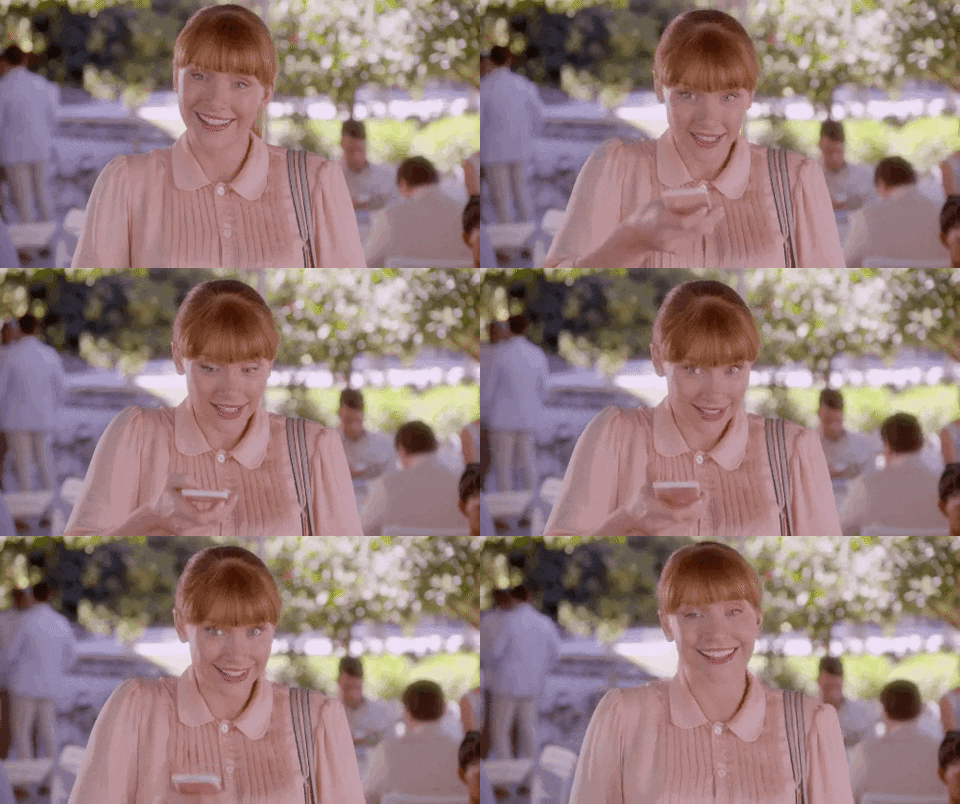
Netflix’s “Black Mirror”, is a series of shows that are topic-related and allows viewers to analyze and dissect each episode. Each episode has many hidden meanings and messages that encourages the audience to decipher what message each episode is discussing. The episode that I will be reviewing is titled “Nosedive”. Nosedive is about a middle-aged woman named Lacey, played by Bryce Dallas Howard. The plot of this episode is about a woman who lives in a almost automated society that is technology driven and highly influenced on ratings of themselves and others. The short film tells the story through the lens of Lacey who is trying to climb up the social ladder by increasing her rating. She faces many challenges in order to reach her goal of receiving a 4.5 rating or higher.
After viewing this short film twice, it is very difficult to find any bad points in this episode of Black Mirror. Each time that I watch this episode, I always find a subliminal message that I can relate to today’s society. In my opinion, Joe Wright, the director of this episode, did a brilliant job of bringing the episode together to make the story intriguing, contextualizing, and very thought-provoking.
Besides how moved I am by the plot and story progression, I was also astounded by the extra effects that was used to enhance this episode as well. The character choice and music selection was almost perfect from my perspective. With every scene the music that was used was set up perfectly; each song set the tone for the specific scene and what was taking place in the short film. For example, when Lacey would be in a more luxurious setting, classical-like music was playing, which I found to be perfect for that setting. Moreover, casting was magnificent. I like how each actor made there character; They brought their character to life. For instance, Alice Eve, American actress that played the role of Naomi, Lacey’s friend, really defined her character. Every scene, every movement seemed almost natural and realistic. The way the characters were portrayed in the film also allowed the audience to grasp the relationship between all the characters. The props used in the film also helped with bringing this episode to life as well.
As previously stated, I find this film so truthful, that I hardly have anything negative to say about this film.
The casting is great. The musical selections are fantastic. Even the message is eye-opening. I genuinely find this film enjoyable and I would recommend this film because it really shows how our society is so technology driven and focused on how others perceive on another. I was able to make a few connections with the real world and media usage. The idea of “ratings” within the film can be strongly influenced by social media and a fake reality. I admit that this film really changed my perspective on social media sites such as Facebook, Twitter, and Instagram; Everyone is hiding behind a false reality! Another thing that I liked about the film is that it discusses “Reputation”. In society, people are supposed to “act a certain way” where you can not say certain things or perform certain actions because it is deemed as inappropriate and can become controversial which really stands out in the short film.
If I were asked to rate the episode Nosedive From the Netflix original TV series “Black Mirror”, I would give it a 10/10. I highly recommend this short film to all people that can access Netflix or that uses social media and other technological devices because I believe it can really change peoples perspective on the effects of social media in today’s society.
Have selfies become a sign of narcissism or empowerment?
The simple “Smile”, “Duckface”, and “Pout”, are just a few of numerous poses that are used to take self portraits, or “selfies”, in this day and age. Selfies have captivated this generation throughout media allowing different people of all ages to be able to capture an image of themselves. Although everyone is snapping photos of themselves on a day to day basis, is it a sign of narcissistic behavior, or is it showing empowerment and confidence in individuals?
Selfies in Social Media
Social Media, according to Lifewire, is a web-based communication tool that enables people to interact with each other by sharing and consuming information. Social Media platforms, such as Instagram, Twitter, and Snapchat, have created a database where you can share photos of yourself to family, friends, and even strangers. Sharing selfies can be a great way to interact with other individuals through the digital world. Although selfies can be very entertaining to share, selfies often create a controversial question of whether they are narcissistic or empowering.
A brief discussion about my thoughts on selfies.
In an Psychology Today article, it discusses the connection between narcissism and selfies. In order to analyze this connection, a study was created for men and women to see who posted content, and if the content was deemed narcissistic. The main attributes that was analyzed was “Self-sufficiency”, “Vanity”, “Leadership”, and “Admiration Demand”. As a result of the experiment, “participants’ total narcissism scores, and measures of all of the narcissism subscales except for Self-Sufficiency”. This means that overall, selfies can be deemed slightly Narcissistic due to the context of the selfie.
However, this does not mean that selfies are completely a form of narcissism.
Selfies can be used to make a statement. Many influential celebrities, such as Michelle Obama, Ellen Degeneres, the Kardashians, and Rihanna, have used selfies as a form of empowerment. Whether they are using their voice for the nation, showing body confidence, or sharing positivity and motivation everyday, these celebrities are doing it by using selfies. According to Cosmopolitan, an international fashion and entertainment magazine for females, selfies are “one of the most popular ways for women to express their individuality online”. Selfies allow all people to share who their personality and who they truly are with the world.
So, Amidst all the controversy of whether or not you are being too vain or self-absorbed, feel free to take a picture of yourself. Embrace your beauty and be powerful! I might take a selfie myself…
Have you ever been with a family member and they criticize you for being on your phone? You may have felt embarrassed or unapologetic. Well, the Information Age has allowed technologies such as cellphones to become very prevalent in our everyday lives. It seems that the human race may have become too dependent on our cellular devices.
So before you decide to pick up your phone, think about how it will impact YOUR everyday life.